
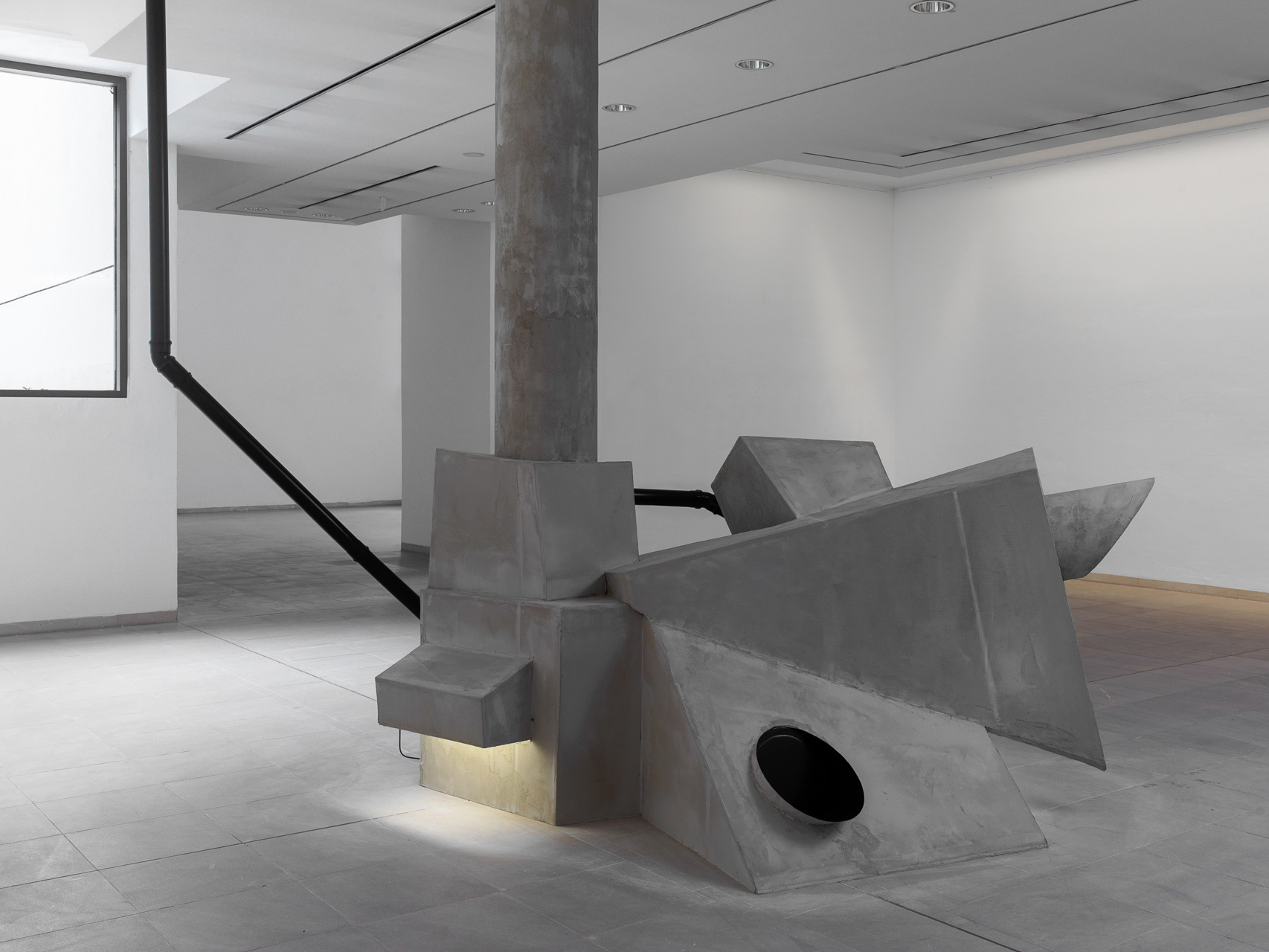
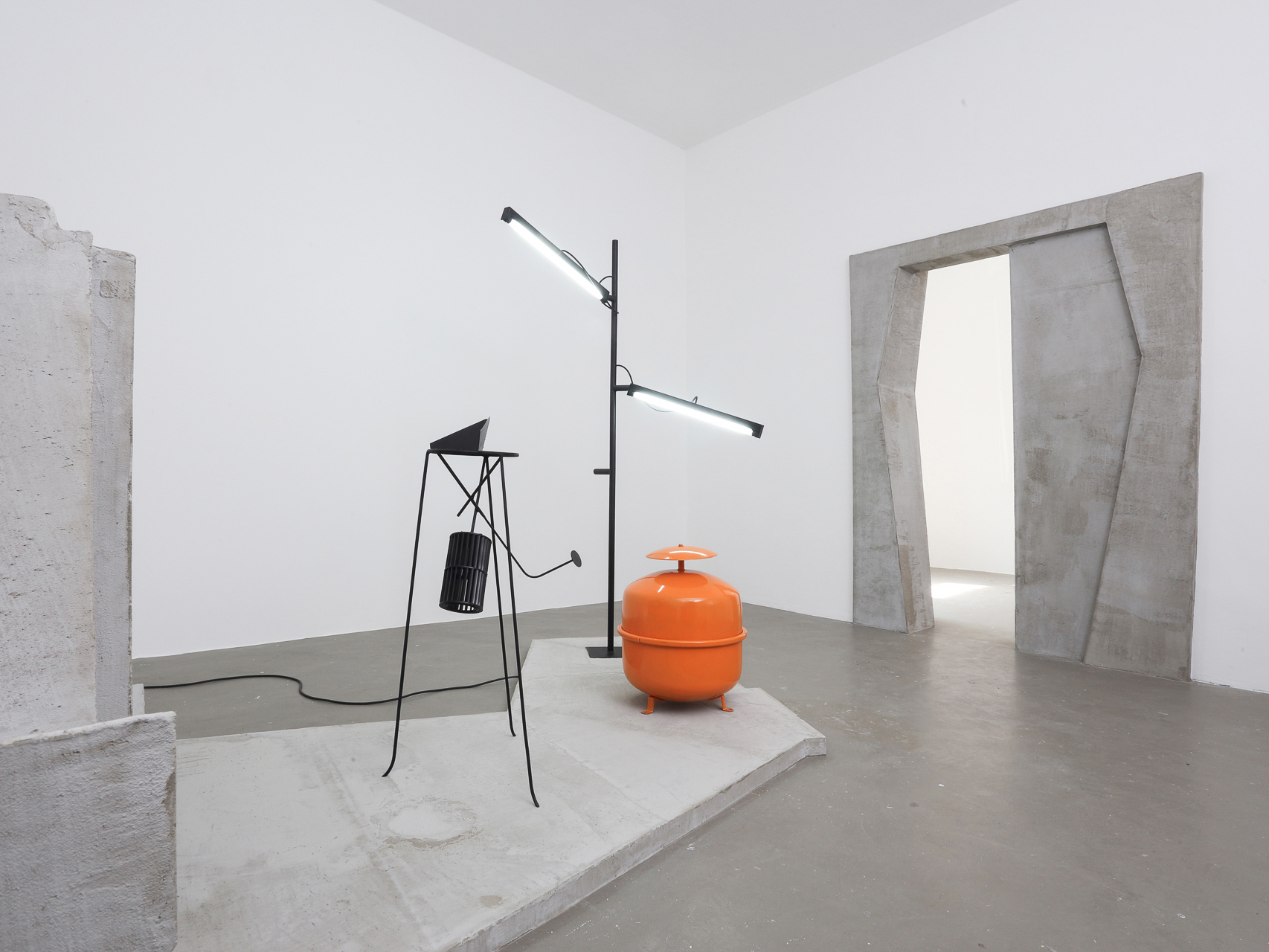

Es dürfte kaum überraschen, dass die Rauminstallationen von Thomas Woll bei vielen Menschen Assoziationen an die Erschaffung von Filmwelten evozieren. Wer jemals die Gelegenheit hatte, ein im Studio erbautes Filmset zu besichtigen oder an der Herstellung eines solchen selbst beteiligt war, wird sich beim Besuch eines Woll‘schen Environments unweigerlich daran erinnert fühlen. Den Eindruck von naturalistischer Mimikry und zugleich artifizieller „Gemachtheit“, den seine architektonischen und technoiden Objekte und Raumelemente erzeugen, lassen an eine handwerklich perfekt gestaltete Kulisse denken. Das allerdings wirft bei jenen, die sich darin bewegen, zwangsläufig die Frage auf, für welche szenische Aktivität und inszenatorische Absicht oder für welchen performativen Zweck seine begehbaren Bilder wohl gestaltet wurden. Und darüber hinaus: Gibt es eine Decodierung für die enigmatischen Konnotationen und Verweise, für das Symbolartige und Zeichenhafte? Beziehungsweise: Gibt es hier überhaupt etwas zu entschlüsseln, zu enträtseln oder zu übersetzen?
Bereits 2010 stellte Anke Volkmer in ihrem Katalogaufsatz zu Thomas Wolls Ausstellung „Ignis“ im Duisburger Kunstverein eine Reihe von ästhetischen und atmosphärischen Vergleichen zu Werken der Filmkunst an. Sehr plausibel und nachvollziehbar beschrieb sie darin Verbindungen zwischen Wolls installativen Settings und den Filmen von Alfred Hitchcock, Andrei Tarkowski, David Lynch und Matthew Barney. (1) Die jeweiligen Handschriften dieser Filmautoren beziehungsweise Künstler bei der Inszenierung von Geheimnisvollem und Unergründlichem, Unwägbarem und Verunsicherndem oder Bedrohlichem und Erschreckendem sind ikonisch, und einige Verwandtschaften zur bildnerischen Rhetorik von Thomas Woll sind deutlich erkennbar. Im Zusammenhang mit Hitchcock verweist Volkmer insbesondere auf das Legen von kalkuliert konstruierten (falschen) Fährten zur Erzeugung des beinahe sprichwörtlichen „Suspense“. Eine vom jeweiligen Plot unabhängige dramaturgische Spannung, die bei Hitchcock für ein Erleben von aufwühlenden Gefühlszuständen sorgt und in manchen seiner Filme auf der Erzählebene mit moralischen und sogar ideologisch-propagandistischen Botschaften hinterlegt ist. Bei Woll geht es ebenfalls um intensives Erleben – um Raumerleben. Seine inhaltliche Hintergrundebene vermittelt allerdings keine Botschaften, sondern lediglich offene Fragen zu den Konstruktionsbedingungen und -bedingtheiten unserer Wahrnehmung, der Kunst und der Welt. Es gibt in seiner künstlerischen Strategie aber noch einen weiteren Aspekt, der ihn mit Hitchcock verbindet: den MacGuffin. So nannte der von der Nouvelle Vague verehrte Genre-Meister (2) den letztlich willkürlich erfundenen Grund, der als scheinbar selbsterklärender Plotfokus das Erzählen einer entsprechenden Geschichte antreibt und in Gang hält. In den meisten Fällen handelt es sich um ein beliebiges Objekt der Begierde wie etwa ein Koffer mit wertvollem oder brisantem Inhalt, dem mehrere Figuren aus unterschiedlichen Motiven nachjagen.
Auch Woll integriert in seine Installationen Elemente, die man durchaus als MacGuffins bezeichnen könnte. Er verbaut ganz unterschiedliche Elemente, die alle gemeinsam haben, dass sie technische Funktionalität suggerieren. Wir treffen beispielsweise auf Antennen, die uns den Empfang von Signalen vermuten lassen: Wer sendet da in welcher Form welche Nachrichten, die dann wo in etwas uns Verständliches umgewandelt werden? Oder wir begegnen Entlüftungs- und Belüftungsabdeckungen: Was soll hier aus welchem Grund klimatisiert werden? Ein unzugänglicher Ort oder ein Aggregat, das wiederum welche Aufgabe zu erfüllen hat? Wir sehen sich nicht erklärende Kabel, Leitungen und Rohre, rätselhafte Behälter und irritierende Gestänge, verborgene Lichtquellen und Hinweise auf versteckte Räume. Diese Doppel- oder eigentlich Polybödigkeit – im wörtlichen wie im übertragenen Sinn – von Thomas Wolls All-over-Installationen wird durch die Platzierung von eigenen „autonomen“ Kunstwerken, wie gerahmten Fotoarbeiten oder kleinen Plastiken, noch gesteigert. Widmet man sich der Betrachtung dieser Arbeiten tritt die gesamte Rauminstallation plötzlich zurück und mutiert zu einem großen Environment-Rahmen, zu einem unkonventionellen oder gar schrägen Ausstellungsambiente.
Einige fundamentale Fragen, die durch dreidimensionale Werke in der Kunst immer wieder an uns gerichtet werden, erfahren in den Arbeiten von Thomas Woll eine besondere Zuspitzung: Was ist Skulptur? Was ist Architektur? Was ist Raum? Und wie vertrauenswürdig sind unsere Sinneseindrücke und deren scheinbar simultane kognitive Verarbeitung? Wie belastbar oder auch zweifelhaft sind unsere mit der Wahrnehmung aufs engste verwobenen Interpretationsleistungen, ohne die wir nicht einmal einfachste Tätigkeiten, geschweige denn komplexe Kommunikationsaufgaben bewältigen könnten? Die sich immer nur in Teilen erschließende Konstruktion seiner Raumwelten wird dabei zu einer ästhetisch erfahrbaren Metapher für die Konstruiertheit unserer Vorstellung von Realität und unseren im Grunde doch recht begrenzten Möglichkeiten darüber zu kommunizieren. Es scheint, als würde Woll uns in noch unbespielte Bühnenbilder schicken, die sowohl von Beckett wie von Wittgenstein, aber auch von den erkenntnistheoretischen Positionen des Radikalen Konstruktivismus inspiriert sind. (3)
Über all das hinaus möchte man Wolls Installationen aber auch als Beleg und als Plädoyer für die immersive Kraft jeder Kunst verstehen. Der vor einiger Zeit in Mode gekommene Begriff der Immersion wird im Zusammenhang mit aktuellen technischen Möglichkeiten verbreitet, die ein entsprechend intensives Erleben von künstlerischen Arbeiten ermöglichen sollen. Verkannt wird dabei jedoch, dass es das ureigene Vermögen aller Kunstwerke ist, immersiv zu wirken. Entscheidend ist dabei nicht ihre jeweilige technische Beschaffenheit, sondern zuallererst, ob und wie wir uns auf sie einlassen. Grundsätzlich können wir in jedes Bild, jede Musik, jedes Theater, jeden Film und sogar in jede Literatur, die wir ja lediglich in Form von komplex systematisierten abstrakten Zeichen vermittelt bekommen, eintauchen. Die Räume von Thomas Woll zeigen besonders eindrücklich, dass Immersionserfahrungen gerade in den Künsten nichts mit Digitalität oder bestimmten medialen Bedingungen zu tun haben, sondern mit unserer Wahrnehmungshaltung, mit unseren Assoziationen und Vorstellungen, unserem Fühlen und Denken. Denn ganz gleich, welche Sinne aktiviert werden, ob die Auslöser dafür analog oder digital sind, ob dabei mit oder ohne MacGuffins gearbeitet wird, das Eintauchen findet doch letztlich immer im Kopf statt.